340 Fascism of the USA versus Star Trek, Star Wars, Blade Runner, and The Man in the High Castle
The audio player is at the bottom of this webpage so scroll to the bottom to listen to the show.
Concurrent news:
- ICE has murdered a number of people, including bystanders, and little to no accountability: Alex Pretti, Renee Nicole Good.
- Bruce Springsteen’s Streets of Minneapolis : https://x.com/mariashriver/status/2016618469740204114?s=61
Working definitions:
- Populism as a general rubric covering political stances that emphasize the idea of the “common people” and position this group in opposition to “elites”.
- Fascism as ultranationalist populism of the far right; wealth is transferred to the private sector
- Communism as ultranationalist populism of the far left; wealth is transferred to the “public sector”
About Fascism:
- The Nature of Fascism, by Roger Griffin (study)
- The 14 Characteristics of Fascism, by Lawrence Britt
- Ur-Fascism, by Umberto Eco (essay)
- Hannah Arendt’s Theory of Totalitarianism, by Anthony Court (essay)
- The Nerd Reich, by Gil Duran. <— Curtis Yarvin a PayPal mafia.
- How Fascism Works https://www.buzzsprout.com/451003/episodes/4142084
- The Nazi Doctors: Medical Killing and the Psychology of Genocide, by Robert Jay Lifton (study)
Websites that rate how our nation-states are doing:
- The Democracy Matrix https://www.democracymatrix.com
- The Economist’s (magazine) democracy index https://www.economist.com/interactive/democracy-index-2024
- Our World Data https://ourworldindata.org/grapher/democracy-index-eiu
Website that evaluates your political biases
https://www.politicalcompass.org
Science Fiction and Fascism
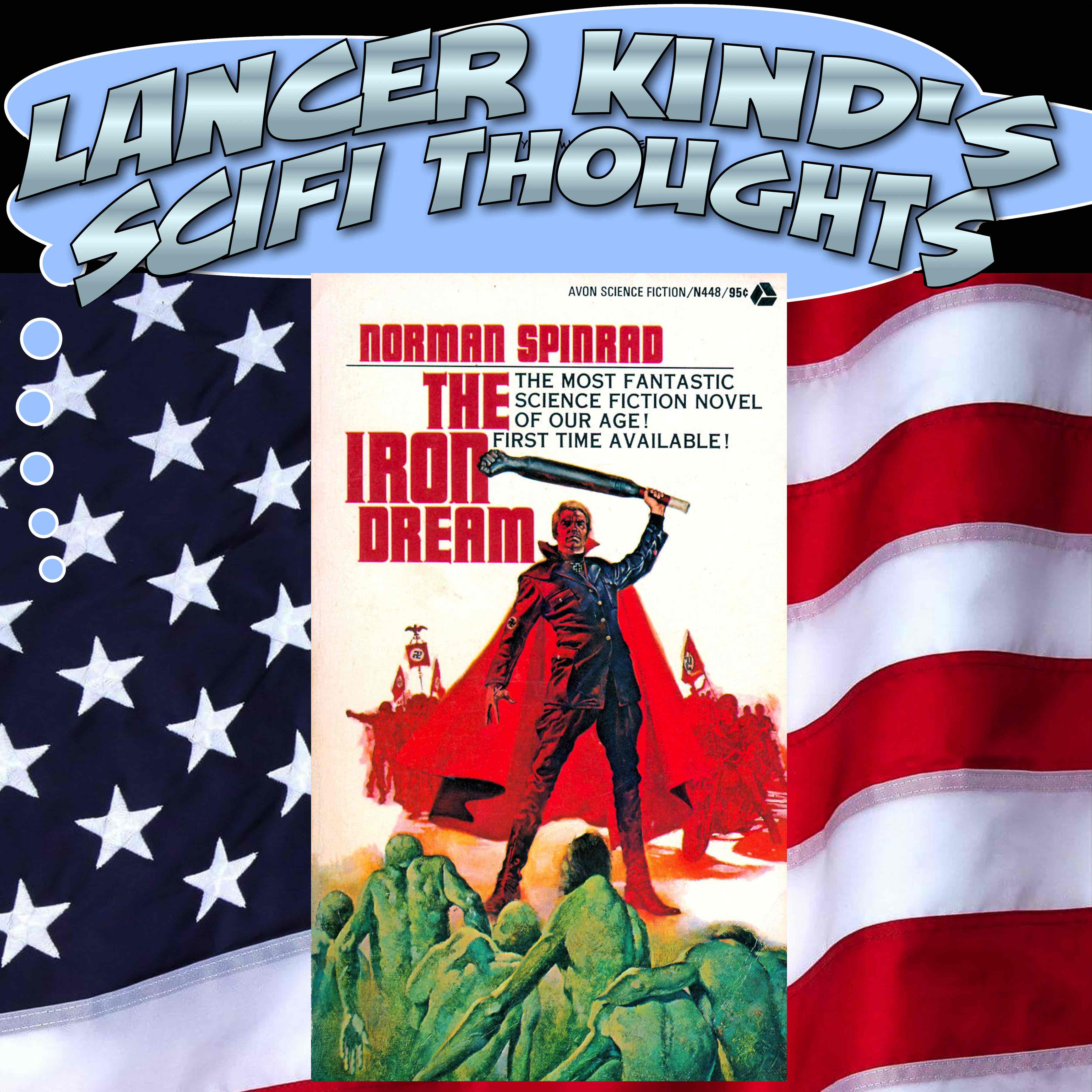
- The Iron Dream, by Norman Spinrad (novel)
- The Old Iron Dream, by David Forbes (history) <- a review of science fiction and the problems in the writer body.
- Lucifer’s Hammer
SciFi Thoughts Fascism Model
The following table is a model used to rate cultures portrayed in science fiction and the USA against a model of fascism. This model unifies the work of Eco and Britt. Each row is a feature of fascism. The first two columns describe Eco and Britt’s model. The remaining columns represent cultures portrayed in a science fiction novel and I added USA to the last column. Although the results are provocative and insightful, I don’t consider this scientific as the method of querying a GPT about what it thinks isn’t a transparently data driven methodology, meaning that measurements weren’t applied to quantify the result of each feature of fascism. And some would argue that you can’t use a methodology of deconstructionism, which is what machine learning does, to fascism which is a term from the humanist domain. This argument makes sense on principle however these results do fit many’s creeping suspicions about the state of our country. Do you know anyone who would argue the opposite, that the USA is becoming *less* fascist?
If you want to reproduce this work, copy paste the model into a GPT and then ask it to evaluate some country or portrayal of a work of fiction against the model and it will generate an opinion.
| Umberto Eco | Lawrence Britt | Man in the High Castle | The Federation (TOS)? | Present in The Empire (Star Wars IV–VI)? | Present in Do Androids Dream of Electric Sheep? | Present in the USA? |
| There is a cult of tradition | Religion and Government are Intertwined | Affirmative – Especially in the Japanese Pacific States, Shinto and traditional customs are deeply respected and influence governance. | Negative – The Federation is secular and rooted in Enlightenment rationalism. While traditions (like Vulcan customs) are respected, they’re not imposed or governmental. | Affirmative – While not religious in a conventional sense, the Sith ideology functions as a dark spiritual tradition tied directly to political power. The Emperor is both spiritual and state leader. | Mixed – Mercerism is a state-supported religion built on myth and ritual, but it’s not quite intertwined with government. Instead, it’s used as a psychological mechanism for control and cohesion. | Mixed – Strong patriotic and “founders” mythology alongside vigorous constitutional secularism. |
| rejection of modernism | Disdain for Intellectuals and the Art | Affirmative – The Nazi regime, in particular, suppresses dissent and free thought; modern art is banned or ridiculed. | Negative – The Federation is fundamentally modernist, celebrating science, art, and exploration. | Affirmative – Intellectual freedom and cultural diversity are repressed. Non-utilitarian thought is unwelcome in the Empire. | Negative – The society is technologically advanced (space colonization, androids), and there’s no overt attack on intellect. However, empathy is valued over logic, in a reactionary sense. | Negative – The U.S. is broadly technology-driven and culturally diverse, though pockets of anti-intellectualism exist. |
| action for action’s sake | Affirmative – The Nazi regime glorifies action, expansion, and conquest, regardless of ethical considerations. | Negative – Action is guided by principles and the Prime Directive; rash action is often criticized. | Affirmative – The Empire often acts with brute force without pragmatic justification (e.g., destroying Alderaan). Action is used to maintain fear and dominance. | Negative – Bureaucracy and institutional logic dominate. Decisions are methodical, not impulsive. | Affirmative – Tendency toward swift, high-profile interventions (military, legislative “show votes,” etc.). | |
| disagreement is treason | Controlled Mass Media | Affirmative – Both the Reich and the Japanese states harshly punish dissent and control information. | Negative – Dissent exists and is sometimes encouraged. There is no evidence of media control or censorship. | Affirmative – Dissent is not tolerated. The Senate is dissolved in Episode IV. We don’t see much media, but control is implied. | Mixed – Dissent isn’t overtly criminalized, but questioning Mercerism is taboo. Media is carefully curated (e.g., Buster Friendly), but not totally controlled. | Mixed – Dissent is legally protected, but dissenters are sometimes branded unpatriotic; media is privately owned and polarized rather than state-run. |
| exacerbating the natural fear of difference | Affirmative – Racial hierarchies and fear of the “other” are central to Nazi ideology in the novel. | Negative – The Federation’s whole ethos is diversity and peaceful coexistence. | Affirmative – The Empire is xenophobic. Aliens are absent from the ranks, and humans (particularly white males) dominate. | Affirmative – Androids are othered and hunted. Fear of the “other” is central to the plot. | Affirmative – Political rhetoric frequently plays on fears of immigrants, “others,” or out-groups. | |
| appeal to a frustrated middle class | Affirmative – The rise of fascism in the novel’s alternate history comes from disaffected populations. | Negative – The Federation is post-economic; there’s no impoverished middle class to appeal to in this way. | Affirmative – The Empire rose by exploiting the discontent during the Clone Wars and promising “order” and “security.” | Affirmative – The entire incentive structure (e.g., moving off-world for a better life) plays on class frustrations. | Affirmative – Both major parties and insurgent movements mobilize middle-class economic anxieties. | |
| There is an obsession with a plot | Identification of Enemies/Scapegoats as a Unifying Cause | Affirmative – The Nazis obsess over rooting out subversives and alternate narratives like The Grasshopper Lies Heavy. | Negative – While threats exist (Klingons, Romulans), the Federation avoids scapegoating; most episodes emphasize understanding over demonization. | Affirmative – The Rebel Alliance is demonized as the root of chaos. Constant enemy surveillance is maintained. | Affirmative – Androids are scapegoated and feared as deceptive enemies. Their existence challenges human identity. | Affirmative – Conspiracy theories (e.g. “deep state”) and scapegoating of political, ethnic or religious groups are common. |
| The enemies are at the same time too strong and too weak | Obsession with Crime and Punishment | Affirmative – The Nazi worldview casts enemies as both omnipresent threats and weak inferiors to be crushed. | Negative – Criminal justice in the Federation is rehabilitative, not punitive; the doublethink around enemies is rarely shown. | Affirmative – Rebels are shown as dangerous and pathetic simultaneously. Punishments are brutal and public (e.g., Death Star). | Affirmative – Androids are portrayed as both dangerous and inferior. The bounty hunting system enacts public punishment. | Affirmative – “Tough on crime” policies and moral panics around both violent crime and “terrorism” abound. |
| Life is permanent warfare | Supremacy of the Military | Affirmative – The Reich is expansionist and militaristic; war is ongoing, including tensions with Japan. | Negative – Starfleet is exploratory and diplomatic first, military second. Conflict is treated as unfortunate. | Affirmative – Military is the primary institution. The Empire perpetuates endless war to retain control. | Mixed – There is no visible military dominance, but bounty hunters act as a kind of paramilitary enforcement against androids. | Affirmative – A large standing military, global bases, and the military-industrial complex sustain a near-constant state of conflict. |
| There is a popular elitism | • Disdain for the Recognition of Human Rights • Rampant Cronyism and Corruption | Affirmative – The elite are glorified while human rights are nonexistent. Cronyism is evident in Nazi leadership. | Negative – Rights are protected, and the Federation is shown as a meritocracy with very low tolerance for corruption. | Affirmative – The elite rule absolutely. Human rights are nonexistent. Command positions are gained through obedience, not merit. | Affirmative – Status is based on owning real animals or emigrating. Androids have no rights; dehumanization is institutionalized. | Affirmative – Wealthy elites exert outsized political influence (lobbying, “revolving door”); human-rights critiques surface mainly abroad. |
| heroism is the norm and dying is the most honorable ending for a hero | Affirmative – Fascist ideals glorify martyrdom and loyalty to the state. | Mixed – While bravery and sacrifice are celebrated, it’s not glorified as the ideal. Life is generally valued over martyrdom. | Affirmative – Imperial officers glorify death in service to the Empire. The Rebels’ heroism ironically contrasts with this too. | Negative – Heroic death is not glorified. Mercer’s suffering is ritualized, but this is symbolic, not militaristic. | Affirmative – Military and first-responder sacrifice are deeply valorized in public ceremony and media. | |
| Transference ones will to power to sexual matters (machismo) | Rampant Sexism | Affirmative – The society is highly patriarchal, especially under Nazi ideology. | Mixed – The ideals of the Federation are egalitarian, but 1960s production values show outdated gender norms. Ideologically Negative, but representation is flawed. | Affirmative – Few women appear in positions of power in the Empire (in IV–VI). It’s implicitly patriarchal. | Mixed – Gender roles reflect 1960s norms; some characters (like Rachel) are objectified. But women hold influence too. | Affirmative – Persistent gender pay gaps, #MeToo revelations, and under-representation of women in top leadership. |
| A selective populism is used to rule as “the voice of the people.” | Powerful and Continuing Nationalism | Affirmative – Nationalism is a defining feature of both ruling regimes. | Negative – The Federation isn’t nationalistic; it’s multi-species and post-national, governed through diplomacy and reason. | Affirmative – “Peace and stability” rhetoric masks authoritarian control; nationalism (humanocentrism) is used to justify power. | Negative – No real nationalism or populist rhetoric; control is subtle and post-national. | Affirmative – Nationalist themes (“America First,” flag-waving, etc.) recur across the political spectrum. |
| There exists a Newspeak | There exists an improvised dictionary or vocabulary. | Affirmative – Indoctrinating language is used, and reality is shaped by what is allowed to be spoken or known. | Negative – The Federation avoids euphemism or ideological doublespeak; terms like “The Prime Directive” are rigorously debated. | Affirmative – Language like “peacekeeping,” “security,” and “New Order” are euphemisms masking oppression. | Affirmative – Mercerism’s language is ritualized and deliberately obscure. Concepts like “kipple,” “specials,” and “empathy boxes” reflect a curated lexicon. | Affirmative – Euphemisms like “enhanced interrogation,” “alternative facts,” and “border security” shape public perception. |
| Obsession with National Security | Affirmative – Both regimes justify repression in the name of state security. | Negative – Security is a concern, but it’s balanced with ethics and diplomacy. No obsession or paranoia evident. | Affirmative – National security is the Empire’s entire justification for power. | Negative – Security is not a dominant theme; the concern is ontological purity, not defense. | Affirmative – Expansive surveillance state, post-9/11 security apparatus, and “homeland security” culture. | |
| • Corporate Power is Protected • Labor Power is Suppressed | Affirmative – The corporate-military complex in the Nazi regime especially aligns with fascist ideals. | Negative – There’s no capitalism in the Federation; work is voluntary and driven by purpose, not profit. | Affirmative – The Empire controls and exploits industries (e.g., mining colonies, slavery on Kessel). Labor is clearly coerced. | Affirmative – Corporations (e.g., Rosen Association) wield huge influence. Android labor is core to colonization. | Affirmative – Deregulation, corporate lobbying, weakening of unions, and tax policies favor big business. | |
| Fraudulent Elections | Affirmative – No real democracy exists; power is centralized and opposition is crushed. | Negative – The Federation is governed democratically with representation from member planets. | Affirmative – The Imperial Senate is dissolved in Episode IV; no democracy remains. | Negative – There’s no indication of elections or governance structures at all. Authority is vague and bureaucratic. | Mixed – Widespread, unsubstantiated fraud claims have undermined confidence even though U.S. elections remain free and fair in practice. | |
| Verdict | The Federation, as portrayed in Star Trek: TOS, is almost a direct ideological counterpoint to fascism. It emphasizes diversity, dialogue, freedom, and ethical restraint. The few shortcomings are more reflective of the era in which the show was written than of the in-universe ideals. | The Galactic Empire as portrayed in Episodes IV–VI is entirely fascist in both structure and symbolism. It embodies every feature of fascism on the list — from propaganda to militarism to racial/biological supremacy. It is literally an empire built on fear (as Tarkin says), designed to reflect the worst traits of real-world authoritarian regimes. | The world of Do Androids Dream of Electric Sheep? is not fully fascist, but it flirts with fascist tendencies — especially in how it: • Scapegoats and dehumanizes androids, • Uses ritualistic religion (Mercerism) to manage emotion and control, • Centralizes corporate and bureaucratic authority. Instead of a fascist empire, it’s a hollowed-out technocracy with post-apocalyptic consumerism and moral decay. It feels authoritarian, not through overt oppression, but through subtle ontological policing — defining what counts as “human” and controlling reality through mediated experience (empathy boxes, media personalities like Buster Friendly). | While the U.S. retains many democratic institutions, the strength of its security apparatus, corporate influence, nationalism, and political polarization drives a number of these fascist-style features into the “Affirmative” column. |
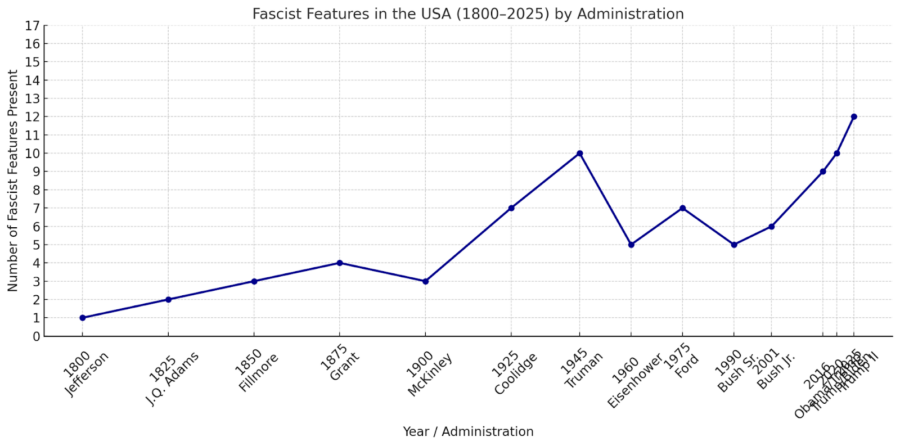
Below is a chart showing the ascendance the USA is experiencing into fascism, based on the model presented above.